Back for the Season? What to Check After Your Car Sat All Summer in South Florida
By Vertical Automotive Team · 7 min read · Maintenance
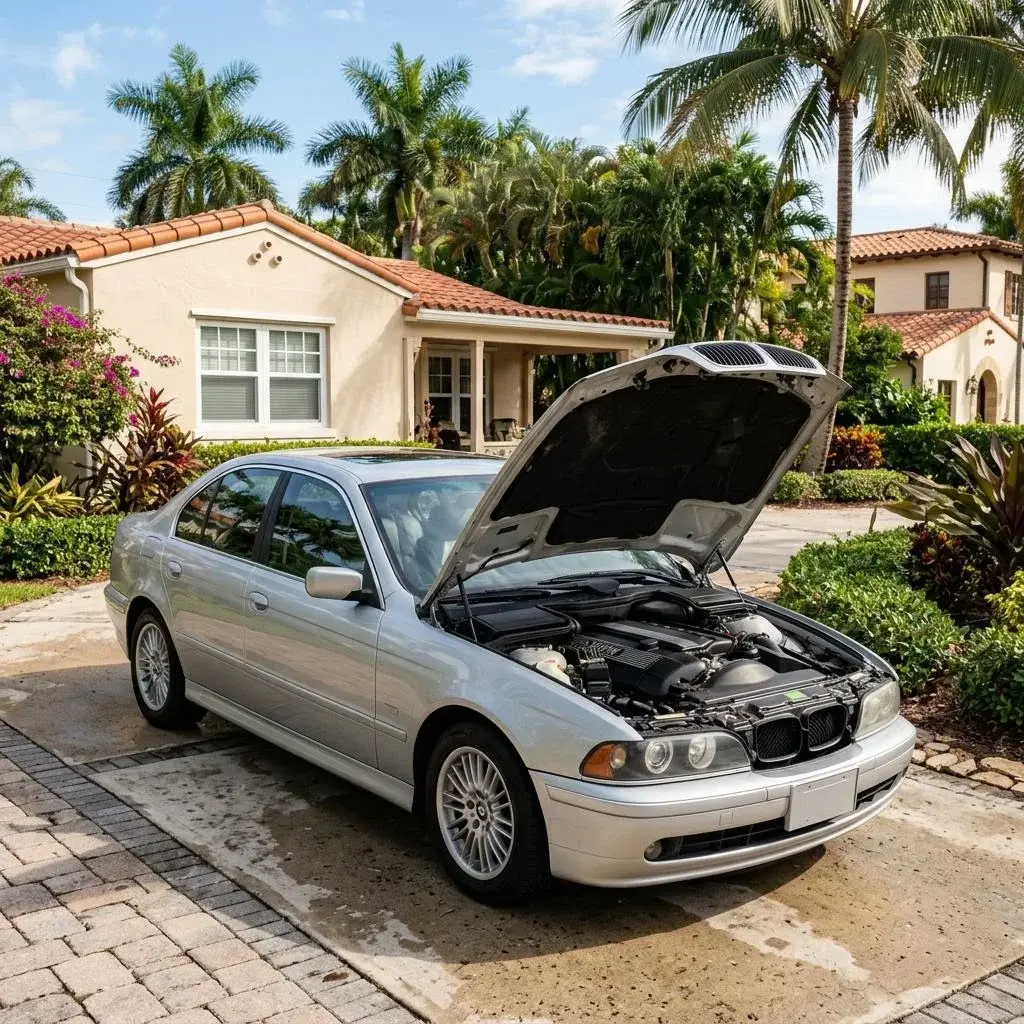
Welcome back. If your car spent May through October parked in a garage, driveway or condo lot in Wilton Manors, Fort Lauderdale or Oakland Park, it's been through months of heat, humidity and sitting still. Cars are built to be driven. Parking one for a long stretch causes its own wear, and South Florida's climate speeds that up. Here's what to check before your first drive of the season, and what to leave to a shop.
Battery: the most common "it won't start"
Batteries slowly drain even when the car is off, because the clock, alarm and onboard computers keep drawing power. Heat speeds up the chemical wear inside the battery. After several months parked, a battery may be dead, or it may start the car once and fail a week later. Hybrids and EVs also have a 12-volt battery that can go flat even when the main high-voltage pack is charged.
- If it starts: don't assume the battery is healthy. Have it load-tested.
- If it doesn't: a jump may get you going, but a deeply drained battery often can't hold a charge afterward.
Tires: pressure, flat spots and sun damage
Tires lose air over time even with no leak. Months later, they may be well under the pressure listed on your driver's door jamb. Tires that held the car's weight in one spot can also develop flat spots, which feel like a vibration for the first few miles. Tires that sat in direct sun can crack in the sidewall.
- Check all four tires (and the spare) cold, before driving.
- Look for cracks in the sidewalls and between the tread blocks.
- A vibration that doesn't go away after 10–15 minutes of driving needs a look.
Brakes: rust and sticking
In humid air, a thin layer of surface rust forms on brake rotors within days. Light rust usually wipes off in the first few stops, and you may hear some grinding at first. After a long sit, though, a caliper can stick or the rust can be heavier. Have the brakes checked if you notice:
- Grinding that continues after the first several stops.
- The car pulling to one side when braking.
- A burning smell or one wheel noticeably hotter than the others.
Fuel: stale gas
Gasoline breaks down over months, and ethanol-blended fuel can absorb moisture. Old fuel can cause rough idle, hard starts or hesitation. If the tank was low when you left, the effect is stronger. Topping up with fresh fuel helps. Ongoing rough running or a check engine light means it's time for a diagnosis.
Rodents, insects and nests
A parked car is shelter. Rodents chew wiring and build nests in engine bays and air boxes. Wasps, ants and lizards move into vents and mirror housings. Before you start the engine, open the hood and look for nesting material, droppings or chewed wires. Check the cabin air intake at the base of the windshield. If a warning light comes on after a car sat, chewed wiring is a real possibility. Don't ignore it.
AC: musty smell and weak cooling
The AC evaporator sits in a dark, damp spot. After months without airflow, mold and mildew can grow there, and you smell it the first time you turn the AC on. A new cabin air filter and an evaporator cleaning usually fix it. Weak cooling is a separate issue that may point to a refrigerant leak.
Fluids, belts and wipers
Check for puddles under the car. Oil, coolant and brake fluid age even when the car isn't driven. Rubber belts and hoses dry out in heat, so look for cracks. Months of sun usually ruins wiper blades. Replace them before the first rain.
Check for open recalls
Recalls may have been issued while you were away. Enter your VIN at nhtsa.gov/recalls to check.
What about Teslas, EVs and hybrids?
EVs avoid the fuel and oil issues, but tires, brakes, the 12-volt battery, AC and rodents all still apply. If the car was stored unplugged, check the main battery's state of charge and follow the manufacturer's storage guidance for next time. Our technicians are Tesla-trained and high-voltage certified.
The easy option: a return-to-season inspection
If you'd rather not crawl around with a flashlight, bring it in. Every car gets a digital vehicle inspection with photos sent to you, so you see what we see. Then we call you with what needs attention now and what can wait. You approve the work before anything is done. Two locations: 707 NE 11th Street, Fort Lauderdale, and 1100 W Oakland Park Blvd, Wilton Manors. Hours: Monday–Friday, 8:00 AM–5:00 PM. Uber/Lyft rides if you need to drop off the car. 36-month / 36,000-mile warranty on parts and labor for repairs. Serving South Florida since 1989.
Frequently Asked Questions
How long can a car sit before the battery dies?
It varies by battery age, vehicle and temperature. Many modern cars can drain a healthy battery in a few weeks to a couple of months. In South Florida heat, a battery that sat all summer should be tested even if the car starts.
Is it safe to just jump-start the car and drive?
Usually for a short trip, but check tire pressure and look under the hood for nests or chewed wires first. Have the battery tested soon after, because a deeply drained battery often fails again.
Why does my car grind when braking after sitting?
Surface rust forms on rotors in humid air. Light grinding that stops after a few braking stops is normal. If it continues, or the car pulls to one side, have the brakes inspected.
Why does my AC smell musty after the car sat?
Mold and mildew grow on the evaporator when there's no airflow. A cabin filter replacement and evaporator cleaning usually fix it.
Do you inspect European cars, Teslas and hybrids?
Yes. We service European, Asian, domestic, Tesla, EV and hybrid vehicles at both locations.