Brakes grinding when you stop? Learn the common causes, how to tell brakes from a wheel bearing, when to stop driving, and how a shop diagnoses it.
Brakes Grinding? What It Means and What to Do Next

If your brakes are grinding, the most likely cause is brake pads worn down to their metal backing plate, so metal is now pressing on metal. Have the car inspected as soon as you can. Grinding is the sound of rotors being damaged, and the longer you drive on it, the more the repair grows. At Vertical Automotive, our ASE-certified technicians in Fort Lauderdale and Wilton Manors can find the exact cause with a complete diagnostic and a digital vehicle inspection, so you see what is wrong before you decide anything.
TL;DR
- A grinding noise when you press the brake pedal usually means the pads are worn through and metal is touching the rotor.
- Grinding that is not tied to braking, or that changes with speed, can point to a wheel bearing instead of the brakes.
- Drive slowly and straight to a shop only if the pedal feels normal. A soft pedal, a hard pull to one side, burning smell or a brake warning light means stop and call a tow.
- Never spray WD-40 or any lubricant on pads or rotors. It can reduce your stopping power.
- Catching worn pads early is the difference between a pad replacement and a bigger job that adds rotors and possibly calipers.
Table of Contents
- Why your brakes grind
- Is it the brakes or a wheel bearing?
- Is it safe to keep driving with grinding brakes?
- What happens when you wait
- What a proper brake diagnosis includes
- What to do before you get to the shop
- Brake service at Vertical Automotive
- Why early repair pays off
- FAQ
- Sources
Why your brakes grind
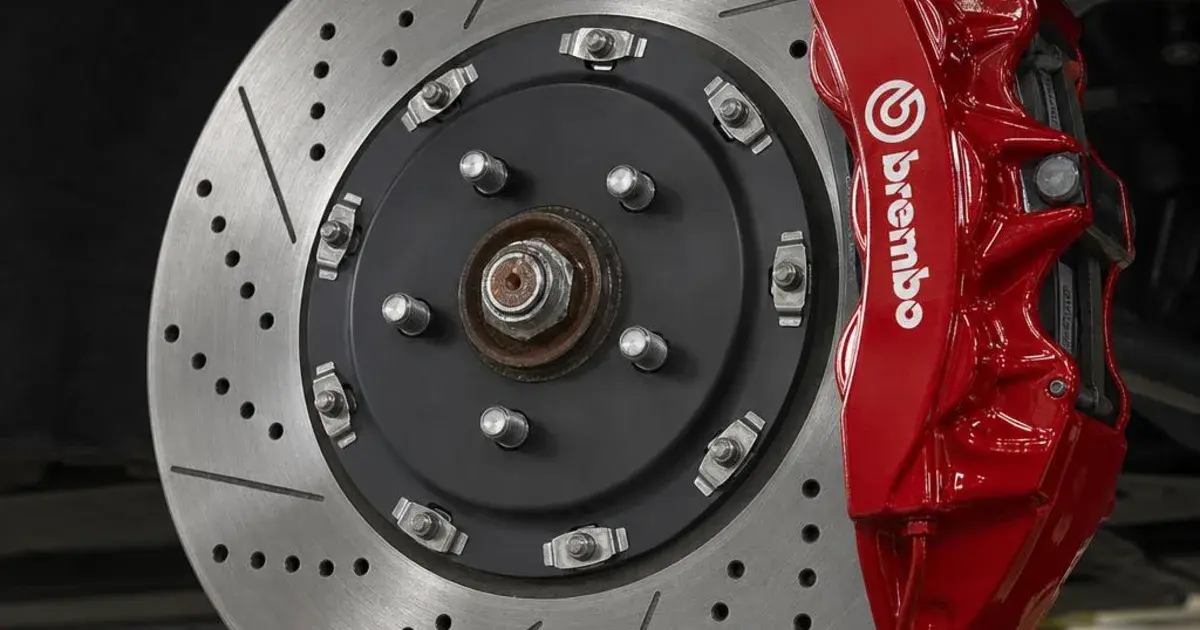
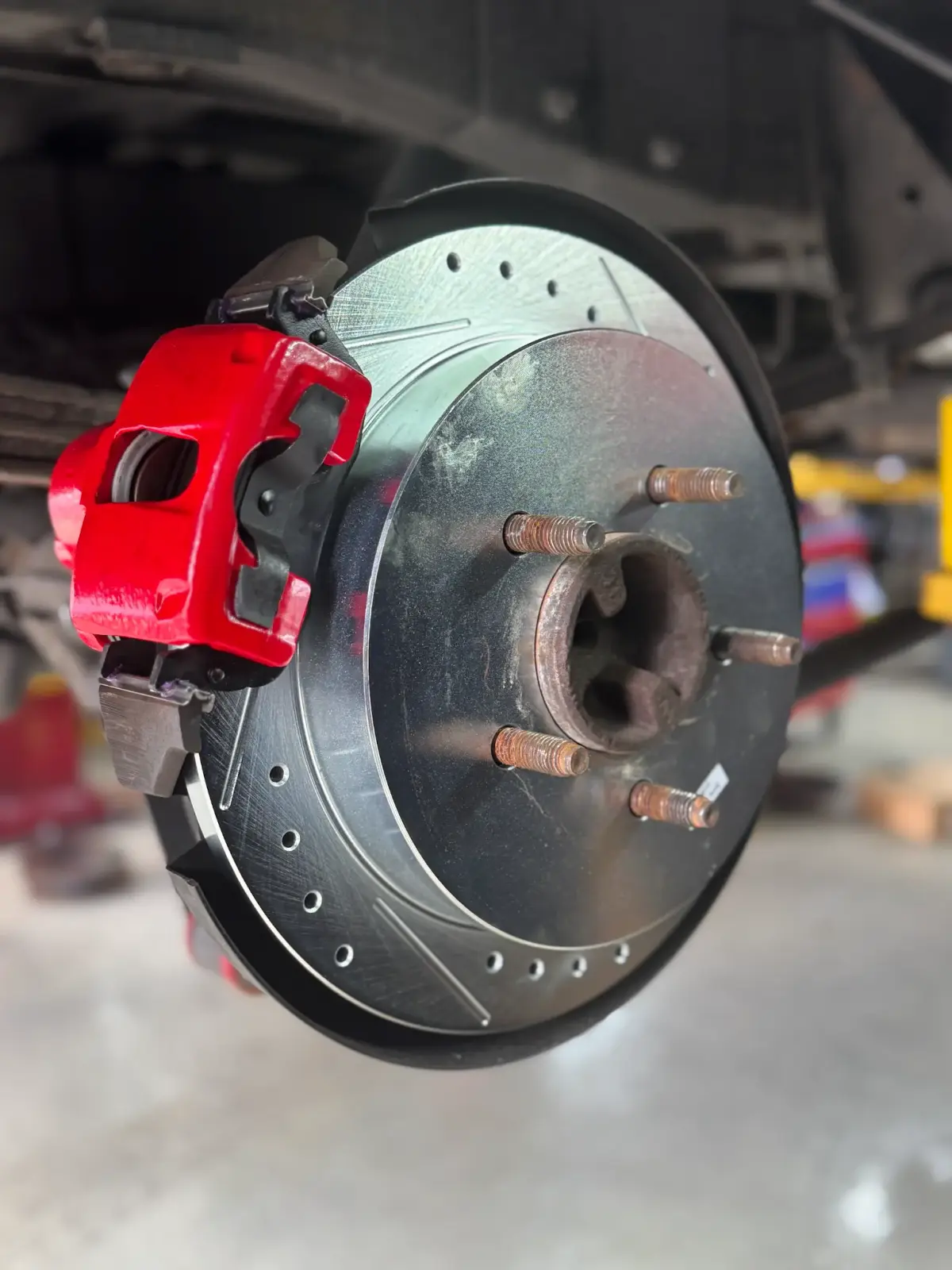
Your brakes work by squeezing pads against a spinning metal disc, the rotor. Each pad is a layer of friction material bonded to a steel backing plate. The friction material is meant to wear away slowly. When it is gone, the steel plate scrapes the rotor, and you hear a deep, rough grinding or growling.

Many pads have a small metal tab, a wear indicator, that squeals when the friction material gets thin. That squeal is your early warning. If you missed it, or your pads have no indicator, you may hear nothing until the backing plate reaches the rotor, and then you get metal-on-metal grinding and sometimes a vibration in the pedal, according to O’Reilly’s brake guide-style descriptions of how wear indicators work. In plain terms: squeal first, grind later, damage after that.
The usual causes
- Pads worn to the metal. The most common cause by far, especially if the grinding only happens when you brake.
- Rust on the rotors. After a car sits for a few days, or after heavy rain, a thin layer of surface rust forms. You may hear a scrape for the first few stops. If it fades within a few brake applications, that is normal. If it stays, the rotor surface may be scored.
- Debris caught in the brake. A small stone or piece of road grit can get between the pad and rotor, or inside a rear drum brake (the enclosed type on the back wheels of some cars).
- A bent dust shield. This is the thin metal plate behind the rotor. If it gets bent, it can rub the rotor and make a scraping sound that sounds like grinding.
- A stuck caliper or seized slide pin. The caliper is the clamp that holds the pads. If it does not release fully, one pad drags constantly and wears out fast.
- A worn wheel bearing. This is not a brake problem at all, but it is often mistaken for one. More on that below.
South Florida adds its own twists. Heavy summer rain, salt air near the coast and short stop-and-go trips on Federal Highway or Sunrise Boulevard all work the brakes hard and encourage rust. If your car sat while you were away for a few weeks, expect some rust noise at first. If the noise does not clear after a day of normal driving, get it looked at.
Is it the brakes or a wheel bearing?
Both can sound like grinding, and even experienced technicians treat bearing noise as tricky. Bearing sound can travel through the drivetrain and come out far from where it started, so it can be hard to place by ear alone, as Brake & Front End explains.
Here is a practical way to narrow it down on a safe, quiet road:
- Listen for when it happens. Noise only when you press the pedal is probably a brake problem like worn pads. A bad wheel bearing typically makes a cyclic chirp, squeal or growl that changes with vehicle speed, can fade at certain speeds, and may get worse when turning, per Tomorrow’s Technician.
- Touch the brakes lightly while it is making noise. A sticking caliper or dragging pad can cause a metallic scrape that changes with speed, but it often goes away or changes when you lightly apply the brakes. That is a useful clue separating it from a bearing, according to Brake & Front End.
- Notice what turning does. If the noise changes when you steer one way, it can help point to which side of the car to check first.
If you cannot tell, that is normal and not a reason to keep guessing. Wheel bearings, brakes and even tires can overlap in how they sound. A technician can lift the car, spin each wheel and check for play and roughness, which settles the question in minutes. Our shop does this as part of a complete diagnostic, so you are not paying for brake parts when the real problem is a bearing.
Is it safe to keep driving with grinding brakes?
Grinding means the brakes are working with little or no friction material left. Your car will still stop, but not as well, and every mile makes the damage worse. Use this rule:
If the grinding just started and the pedal feels normal, drive straight to a shop. Go slowly, leave extra following distance, and avoid the highway. I-95 and I-595 are not the place to find out how long your stopping distance has become.
Stop driving and arrange a tow if any of these happen:
- The brake pedal feels soft, spongy or sinks toward the floor.
- The car pulls hard to one side when you brake.
- You smell burning or see smoke from a wheel.
- You hear a clunk or bang.
- The brake or ABS warning light comes on. Our dashboard warning lights guide explains what each one means.
- The car takes noticeably longer to stop.
If you pull over, do not touch the wheel, rotor or caliper right away. Brake parts get hot enough to burn skin, so let them cool first.
If you are unsure whether your car is safe to drive, call us before you move it. We would rather help you arrange a tow than have you drive on failing brakes.
What happens when you wait
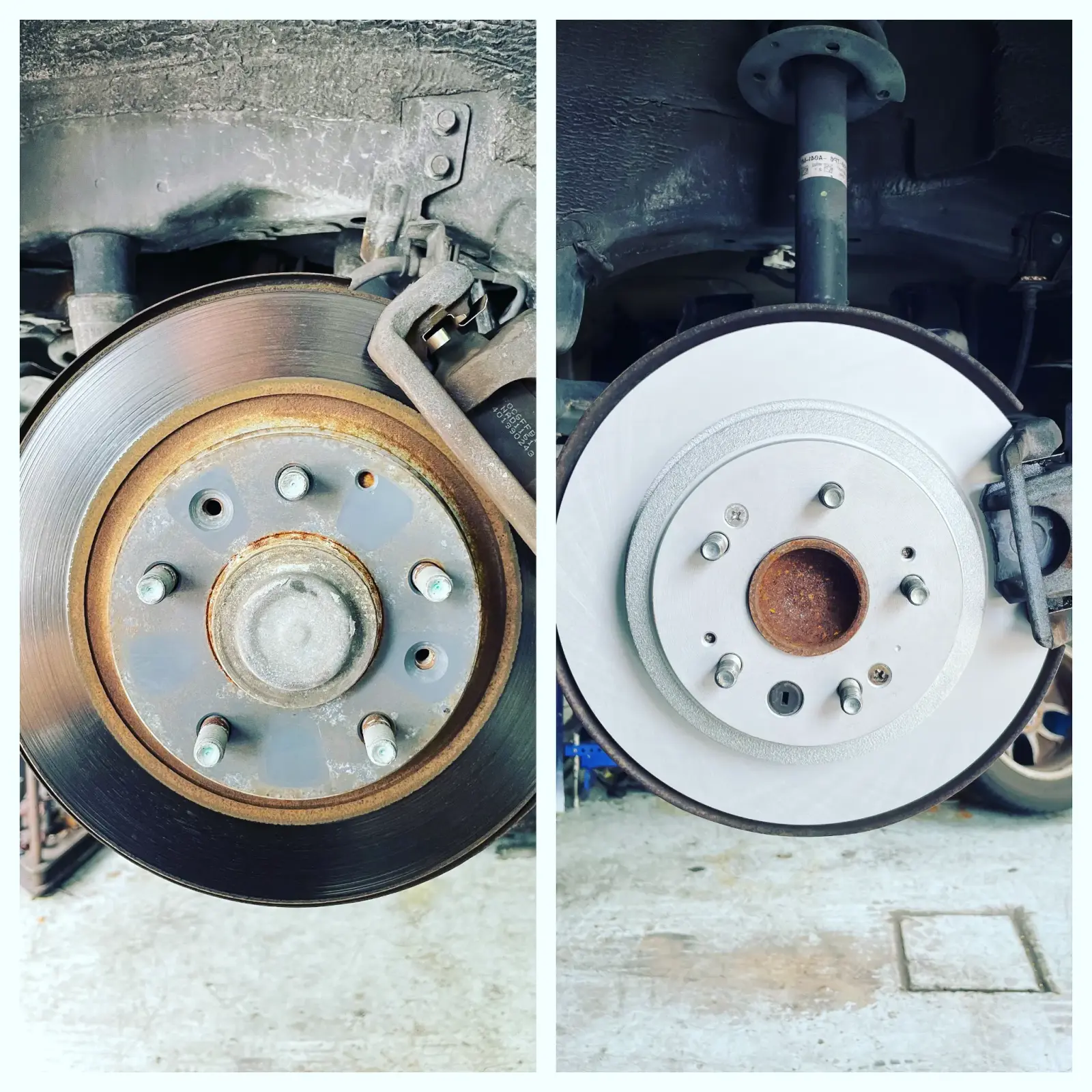
Pads are the cheap, designed-to-wear part. Rotors and calipers are not. Once the backing plate cuts into a rotor, the rotor surface is scored and often too thin to reuse. A sticking caliper can overheat and wear out other parts around it. So the choice is rarely “grinding now or later.” It is a simpler repair now or a larger one soon.
Typical brake pad life gives you a sense of how often this comes up. The Motorist Assurance Program, an auto-industry service standards group, says pads commonly last 30,000 to 70,000 miles, depending on your driving habits and vehicle type, and suggests checking them every 10,000 to 15,000 miles. That wide range is real. Several things shorten pad life:
- Stop-and-go traffic. Lots of braking in city driving wears pads faster than steady highway miles.
- Heavy vehicles. SUVs, trucks and loaded cars need more braking force.
- Hard braking. Late, hard stops use up friction material.
- Vehicle type. Many European cars wear pads and rotors faster, and some hybrids and EVs wear them slower because regenerative braking does part of the slowing. That can also let rust build up on rotors that are used less.
Because the interval depends on all this, the best schedule for your car is the one in your owner’s manual combined with a regular look at the actual pad thickness.
What a proper brake diagnosis includes
A good shop does not guess from the noise. A thorough brake inspection normally runs in this order:
- A road test to confirm the noise comes from the brakes and which corner it is coming from.
- Pad measurement. Thickness of the friction material on every pad, inner and outer.
- Rotor measurement. Each rotor is measured against the minimum thickness stamped on it. Below that, it must be replaced.
- Caliper and hardware check. Stuck pistons, seized slide pins, and fluid leaks.
- Wheel bearing check if the noise does not match the brakes.
This is where a digital vehicle inspection helps. At Vertical Automotive, our technicians document what they find on your car so you can see the worn pad or scored rotor yourself and understand why a part needs replacing, and what does not. Our promise is honest diagnostics: you hear what is wrong, what is urgent and what can wait.
A note on “warped rotors”
You may be told your rotors are warped. In most modern cars the real issue is uneven rotor thickness, called runout, which comes from rust, debris, a bent hub or a bad wheel bearing, as O’Reilly describes. That is why a measured diagnosis matters: the fix depends on the true cause, not the label.
What to do before you get to the shop
There is not much to do at home, and one thing to avoid.
Do not spray WD-40 or any lubricant on the brakes. Oil, grease or WD-40 on pads or rotors can contaminate the lining and lead to uneven braking or longer stopping distances, as AA1Car’s brake guide warns. It will not silence a worn pad, and it makes a safety part worse.
Do not keep testing the noise. Repeated hard stops to “see if it’s gone” just wear the rotor more.
Note what you hear. When does it start? Does it happen only on braking, or also while cruising? Is it front or rear, left or right? Does it change with speed or turning? These details save diagnostic time.
Look through the wheel spokes if you can do it safely. With the car parked on level ground and the wheels cold, you may see the pad between the rotor and the caliper. If you see almost no friction material, or only bare metal, that confirms what the noise already suggests. Most owners are better off leaving the actual pad replacement to a shop: it involves lifting the car, handling safety-critical parts, and getting the details right, such as hardware, torque and a proper test drive.

Brake service at Vertical Automotive
If your brakes are grinding, bring the car to either of our two South Florida shops and we will start with a diagnosis. Our brake and rotor service covers pads, rotors and the rest of the brake system on European, Asian, domestic, hybrid and electric vehicles. You can book at Fort Lauderdale or Wilton Manors.

Here is what you get when we do the work:
- ASE-certified technicians who inspect the whole brake system, not just the part making noise.
- Digital vehicle inspection, so you see what we see.
- A 36-month/36,000-mile warranty on our repairs.
- Experience with your kind of car. We have serviced over 54,000 vehicles and hold a 4.9-star rating on Google, with a 99% customer satisfaction rate.
If you drive an EV or hybrid, tell us when you book. Regenerative braking changes how the pads and rotors wear, and our team is equipped for hybrid and EV service. If the noise is coming from something other than the brakes, our complete diagnostic finds it, so you do not replace the wrong part.
Want to know more about the warning signs before the grinding starts? Read our guide to five brake warning signs you shouldn’t ignore. Brake fluid is also part of a healthy system, and our article on brake fluid replacement covers its interval and what affects the cost.
Why early repair pays off
A brake job done when the pads are thin is a routine maintenance visit. A brake job done after weeks of grinding is a repair. Keeping up with maintenance also pays off over the life of the car, which we explain in why maintaining your car saves thousands.
The habits that keep brakes quiet and safe are simple:
- Have the pads and rotors inspected at regular service visits, or about every 10,000 to 15,000 miles.
- Act on a squeal right away. It is the cheapest warning you will get.
- Avoid riding the brakes on long downhill or stop-and-go stretches.
- Replace brake fluid on schedule.
- If a car has been parked for weeks, drive it gently for the first few stops and listen.
FAQ
Why are my brakes grinding when I stop?
The most common reason is pads worn down to the metal backing plate, so metal scrapes the rotor each time you brake. Other causes include debris, a bent dust shield, rust on the rotor or a stuck caliper. A technician can tell which one by measuring the pads and rotors.
Can I drive with grinding brakes?
If the noise just started and the pedal feels normal, drive slowly and directly to a shop, avoiding highways. If the pedal is soft, the car pulls to one side, you smell burning or a brake warning light is on, stop and call a tow. Every extra mile with grinding brakes damages the rotors more.
Is the grinding from my brakes or a wheel bearing?
Noise that happens only when you press the pedal usually points to the brakes. A wheel bearing noise tends to change with speed and often gets worse when turning, even without braking. A quick inspection with the wheels off the ground settles it.
How often should brake pads be replaced?
There is no single mileage. Pads often last 30,000 to 70,000 miles, but city driving, heavy vehicles and hard braking shorten that. The reliable method is to have the pad thickness measured at regular service visits and replace them before they reach the metal.
Can I spray WD-40 on grinding brakes?
No. Lubricants on pads or rotors can contaminate the lining and reduce braking. It will not fix worn pads, and it can make stopping less safe.
Sources
- How Often Should You Replace Your Brake Pads? (Motorist Assurance Program)
- Wheel Bearing Noise Diagnostics (Brake & Front End)
- Bad Wheel Bearing? Noise Troubleshooting (Tomorrow’s Technician)
- How to Stop Disc Brake Squeal (AA1Car)
- Why Are My Brakes Grinding? (O’Reilly Auto Parts)
Recommended
About the Author

Vertical Automotive
Editorial team