Is your transmission slipping? Learn the warning signs, what causes it, whether it's safe to drive, typical US repair costs and what to do first.
Transmission Slipping: Signs, Causes and What to Do
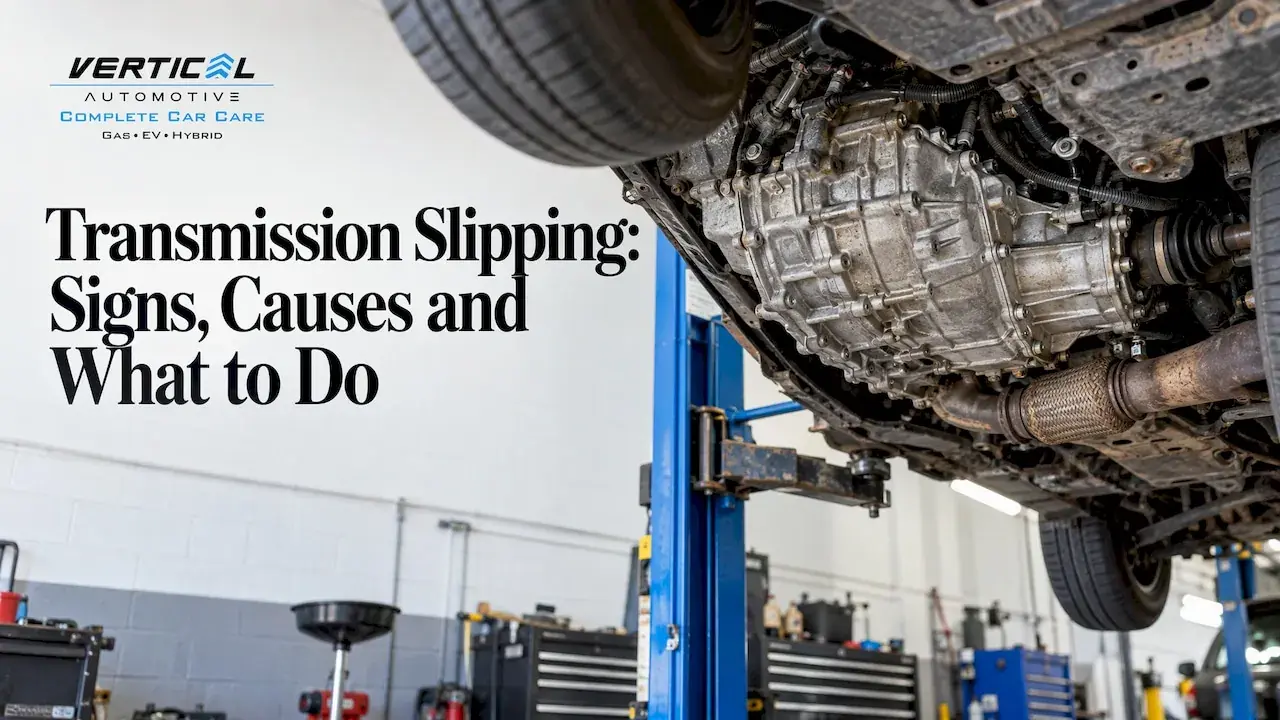
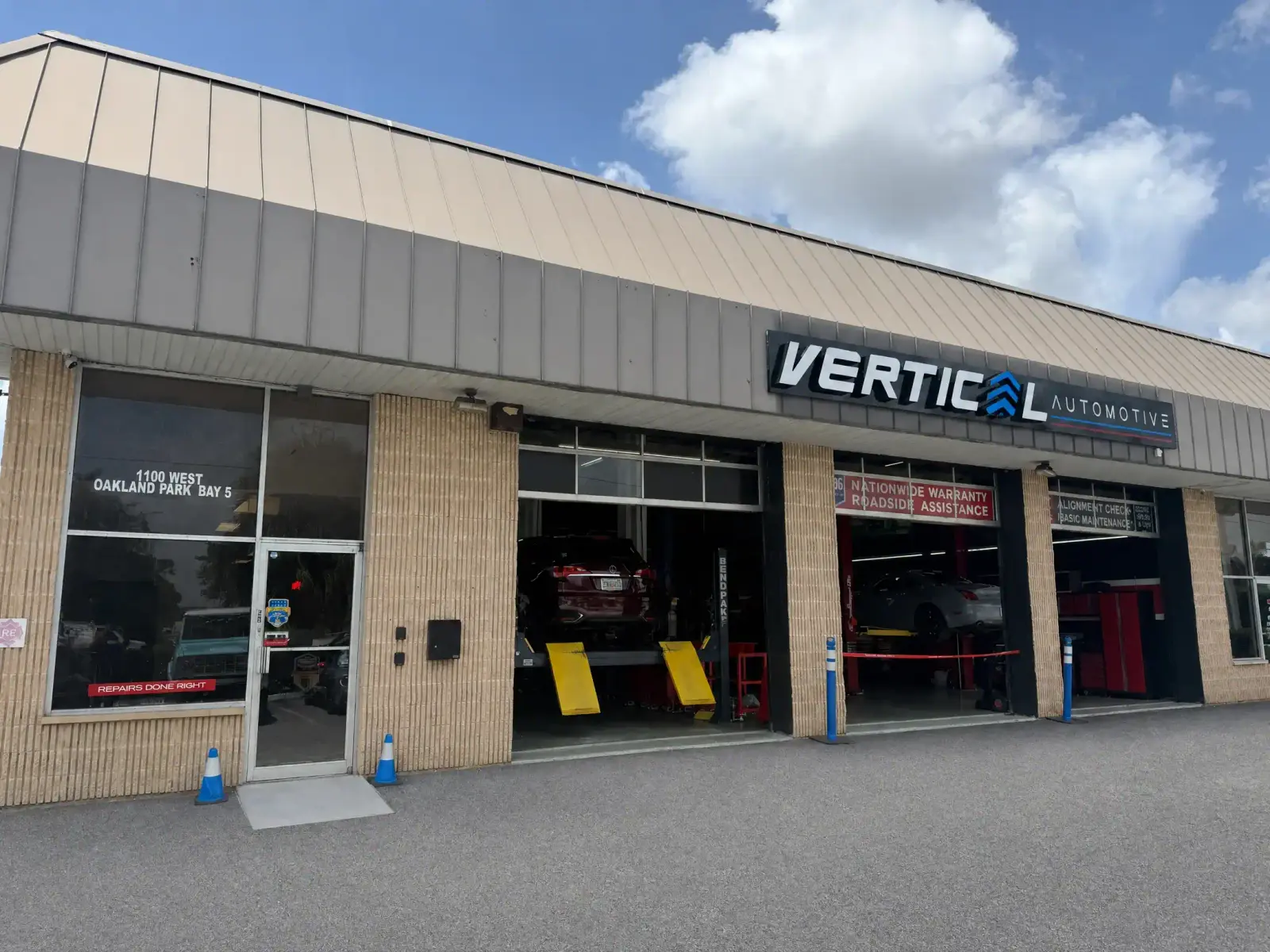
If your engine revs but the car doesn’t speed up, or the car seems to drop out of gear, your transmission is slipping. Don’t keep driving on it and hope. Slipping can start with something small, like low fluid or a worn part, and turn into a repair costing thousands. The right move is to get a proper diagnosis before anyone talks about a rebuild or replacement. At Vertical Automotive, our ASE-certified technicians in Fort Lauderdale and Wilton Manors start with a complete diagnostic, so you know what is actually wrong first.
TL;DR
- Transmission slipping means the engine speed and the car’s speed stop matching: revs climb, acceleration lags, or the car drifts out of gear.
- Common causes are low or leaking fluid, burnt or wrong fluid, worn clutches or gears, faulty solenoids and torque converter problems.
- Slipping can be a safety hazard, especially on highways. If you see several symptoms at once, have the car towed.
- A slipping transmission is not always a failed transmission. Fluid, sensors, engine misfires and software can all look the same, so diagnose before you replace.
- Typical U.S. costs run from a few hundred dollars for a fluid service or solenoid to several thousand for a rebuild or replacement.
Table of Contents
- What a slipping transmission actually feels like
- What causes a transmission to slip
- Is it safe to drive with a slipping transmission?
- What you can safely check first
- How a slipping transmission is diagnosed
- How slipping is repaired, and what it costs in the U.S.
- Why a Fort Lauderdale shop is the right next step
- How to lower the risk of slipping
- FAQ
- Sources
What a slipping transmission actually feels like
Your transmission’s job is to pass engine power to the wheels through the right gear. When it slips, that connection weakens. The engine does its work, but the power doesn’t fully reach the wheels.
Here is what drivers notice most:
- Revs jump without speed. The tachometer needle climbs, the engine sounds loud, and the car barely picks up speed.
- Sluggish or delayed acceleration. You press the pedal and there is a pause before the car responds.
- Gear changes that feel wrong. The car shifts late, shifts hard, hesitates, or jerks between gears.
- Trouble going into Drive or Reverse. AAA lists jerking, hesitation and trouble engaging Drive or Reverse among the signs of transmission trouble.
- Strange noises. Whining, humming or grinding, which the same AAA article ties to transmission problems.
- Burnt smell or fluid spots. A burnt odor can mean overheated fluid. Fresh oily spots under a parked car are a warning, because transmission fluid should stay sealed inside. The color varies by vehicle and isn’t always red or pink.
- A warning light. A check engine light alongside any of the above makes the case stronger.
When revving is normal
Not every rise in revs is slipping. AAA notes that engine revving without immediate acceleration can be normal in many CVTs and some hybrids. A CVT is a continuously variable transmission, which uses a belt and pulleys instead of fixed gears. The same article says excessive revving or declining performance deserves evaluation. If the car used to feel one way and now feels different, trust that change.
What causes a transmission to slip
A transmission is a hydraulic system. Fluid carries pressure, cools parts and lubricates them. Most slipping traces back to something that disturbs that pressure or wears the parts that grip.
Low or leaking fluid
This is the first thing to look at. Less fluid means less pressure, more heat and more friction. A low level usually means a leak, so topping off isn’t the whole answer. AAA’s Via guidance says drivers should check fluid only as the owner’s manual directs, because many vehicles don’t have a dipstick, and a low reading likely points to a leak that needs attention.
Burnt, dirty or wrong fluid
Fluid wears out with heat and use. Old fluid can’t cool or grip the way it should. The wrong type of fluid can cause problems too. Fluid service helps prevent trouble, but AAA is clear that it does not repair components that are already worn or damaged. That is why a fluid change should follow a diagnosis, not replace one.
Worn clutches or gears
Inside an automatic, clutch packs engage to hold each gear. When the friction material wears down, the clutches can’t hold, and the transmission slips under load. Worn or broken gears have the same effect.
Faulty solenoids
Solenoids are small electrically controlled valves that direct fluid to the right place at the right time. When one sticks or fails, a shift can flare, delay or not happen.
Torque converter problems
In an automatic, the torque converter links the engine to the transmission. When it fails, you can feel shudder, slipping or poor response.
CVT-specific causes
CVTs are sensitive to fluid level in both directions. Transmission Digest explains that too little fluid can impair lubrication, while overfilling can aerate it and disrupt pulley control. Poor lubrication can damage the belt or chain.
Things that only look like transmission failure
This matters because the fix may be much cheaper than you fear. A university-level drivetrain lesson on automatic transmission diagnosis cautions that a low fluid level, an engine misfire, a speed-sensor fault or a software issue can resemble transmission failure. Diagnosis should come before any replacement decision.
Hybrids and EVs
Many hybrids don’t use a conventional geared automatic, and most EVs use a single-speed reduction gear. If your hybrid or EV feels like it is losing power, it can be a motor, inverter, battery or software issue rather than a classic slipping transmission. That takes specialist diagnostic equipment. Our team handles hybrid and EV service for exactly that reason.
Is it safe to drive with a slipping transmission?
Treat it as unsafe until proven otherwise. USA Today’s reporting says slipping, slow acceleration or trouble staying in gear can create a safety hazard, especially on highways, and that if you have multiple symptoms, you should have the vehicle towed.
Here is a practical way to decide:
- Mild, occasional hesitation, no warning light, no leak: limit driving to short, low-speed trips and book a diagnostic soon.
- Repeated rev flare, delayed engagement, or a check engine light: stop highway driving and get the car in as soon as you can.
- Several symptoms at once, burning smell, grinding, or the car won’t hold a gear: park it and arrange a tow.
Every extra mile on a slipping transmission creates heat and friction, which can turn a minor repair into a major one. South Florida makes that worse: stop-and-go traffic on I-95 and Oakland Park Boulevard, plus summer heat, are hard on transmission fluid.
What you can safely check first
You don’t need tools to gather the most useful information. Do these before you call:
- Look under the car. Check where you parked overnight for fresh oily spots.
- Check the fluid only if your manual says to. Follow the owner’s manual procedure exactly. Many newer cars have no dipstick, and the manual will tell you.
- Note when it happens. AAA suggests noticing whether symptoms occur cold or warm, at high speeds, or on the highway, because those details help diagnosis.
- Write down what you see. Which gear, what speed, which warning lights, and whether it is worse uphill or when towing.
Don’t add random fluid or an additive on a guess. The wrong fluid can make things worse, and a CVT can be harmed by overfilling. Bring the notes to the shop instead.
How a slipping transmission is diagnosed
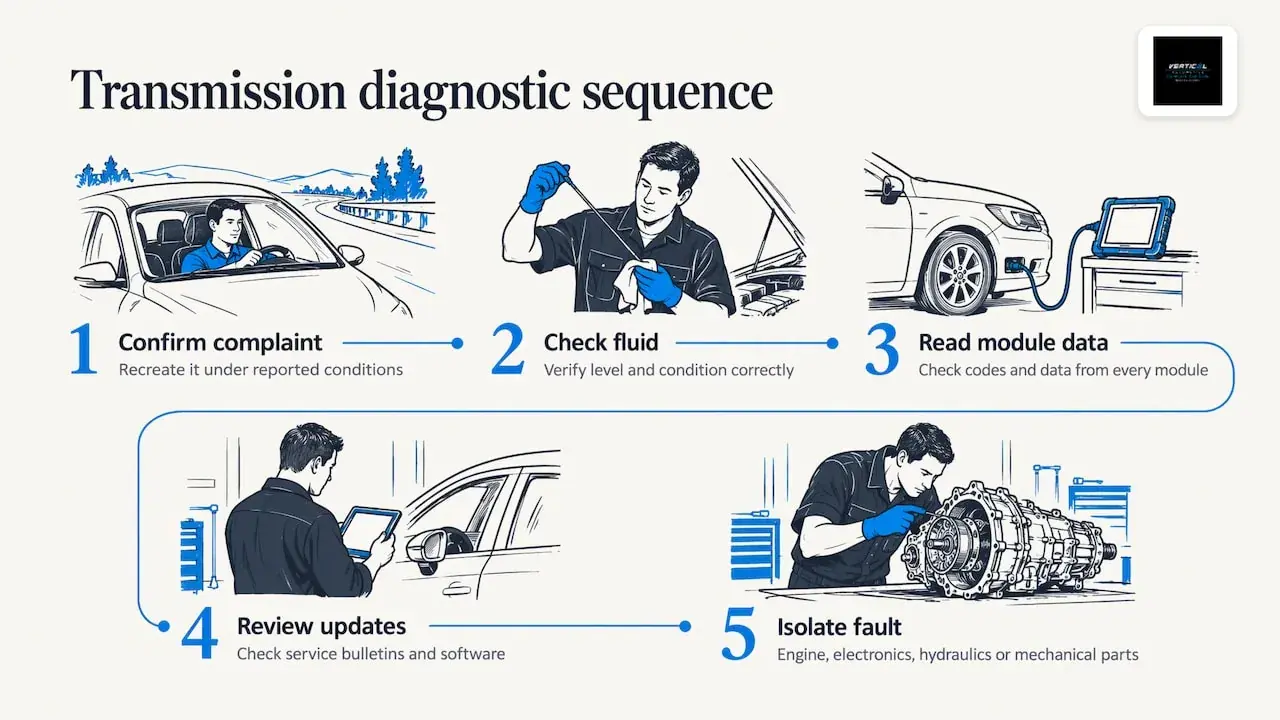
Good diagnosis works from the symptom to the cause, not from the symptom to a part. The drivetrain lesson mentioned above lays out the order: confirm the complaint under the conditions you reported, check fluid level and condition correctly, read codes and data from every module, review service bulletins and software updates, and decide whether the fault is in engine controls, electronics, hydraulics or mechanical parts. Only then does it make sense to drop the pan or test pressure.
For CVTs, pressure data matters. Gears Magazine’s technical piece explains that pressure readings show whether the pump can hold the pressure the transmission needs to prevent belt or clutch shudder and slipping.
This is where an honest diagnostic pays for itself. If the cause is a sensor, a leak or a software issue, you avoid paying for a rebuild you don’t need. If the transmission truly is worn, you know that before you decide what to do. Our complete diagnostic is built around that kind of answer, and our digital vehicle inspections let you see what the technician found.
How slipping is repaired, and what it costs in the U.S.
The repair depends on the cause. Costs also vary by vehicle and damage, so treat the ranges below as typical U.S. figures, not quotes. USA Today’s August 2026 reporting gives these typical ranges:
| Repair | Typical U.S. range |
|---|---|
| Fluid service | $150 to $400 |
| Solenoid replacement | $75 to $450 |
| Clutch repair | $1,200 to $2,500 |
| Transmission rebuild | $1,800 to $5,500 |
| Transmission replacement | $3,000 to $8,000 or more |
Car Talk, in August 2025, put mainstream-vehicle automatic transmission replacement at about $2,500 to $7,500, and noted that low-volume luxury vehicles can cost more. European makes often sit toward the higher end for parts and labor, which is one reason an accurate diagnosis first is worth it.
The pattern is clear: the earlier slipping is caught, the more likely the fix is on the lower half of that table. A leak caught early costs far less than a transmission cooked by low fluid.
Repair or replace?
If the fix is a leak, a solenoid or a fluid service, repair is the obvious route. If the internal parts are worn, the question becomes whether the rest of the car justifies the investment. Our guide on repairing versus buying new walks through that math. Repairing is often the better value when the engine, body and the rest of the car are in good shape.
Why a Fort Lauderdale shop is the right next step
Slipping is a problem where the wrong guess is expensive. Replace fluid when the clutches are worn and you pay for a service that doesn’t fix it. Replace a transmission when the cause was a sensor and you have paid thousands for nothing. Doing it yourself in a driveway isn’t practical either: reading module data, checking pressure and reviewing bulletins takes professional equipment.
At Vertical Automotive, here is what you get:
- ASE-certified technicians who work on European, Asian, domestic, hybrid and electric vehicles.
- Honest diagnostics with digital vehicle inspections, so you can see what is going on with your car.
- A 36-month/36,000-mile warranty on our work.
- Two locations, in Fort Lauderdale and Wilton Manors, serving drivers across the area including Oakland Park and Pompano Beach.
- A 4.9-star Google rating and more than 54,000 vehicles serviced.
If your car is slipping, start with our transmission service page, or go straight to the auto repair services list and book a complete diagnostic. Driving a European car? Our team covers those too. Prefer to read more first? Our transmission service and fluid change guide explains what a fluid service involves.

Our transmission service covers the work your car needs once the cause is known. The Transmission repair line on our repair page has no published price, because the right price depends on what the diagnostic finds. Book a diagnostic and you will know where you stand.
How to lower the risk of slipping
Most prevention comes down to fluid and attention.
- Follow the owner’s manual. Car Talk notes that the manual sets the service interval, and that towing may call for more frequent service.
- Know your schedule. AAA Via gives a broad range of 30,000 to 150,000 miles between fluid replacements, with exceptions, and directs owners to follow their own vehicle’s schedule. That is a wide gap, so your manual matters.
- Count severe use. AAA identifies towing, stop-and-go traffic, frequent short trips and some road conditions as factors that speed up fluid breakdown. Most South Florida commuting fits at least one of those.
- Fix leaks early. A drip you ignore becomes low fluid, then heat, then wear.
- Don’t ignore small changes. A slightly late shift or a new noise is far cheaper to look at now than later.
Regular maintenance elsewhere in the car helps too. Engine oil and the transmission both depend on clean, correct fluid, and our post on why regular oil changes matter shows how routine service protects the whole drivetrain.
FAQ
Why is my transmission slipping?
The most common reasons are low or leaking fluid, burnt or incorrect fluid, worn clutches or gears, faulty solenoids and a failing torque converter. Sensors, engine misfires and software issues can imitate the same symptoms. A diagnostic tells you which one it is.
Can I keep driving with a slipping transmission?
It isn’t a good idea. Slipping can be a safety hazard, especially at highway speeds, and each mile adds heat and wear. If you notice several symptoms at once, have the car towed to a shop.
Will a fluid change fix a slipping transmission?
Sometimes, when low or old fluid is the whole problem. But AAA says fluid service doesn’t fix parts that are already worn or damaged, so get the car diagnosed first.
How much does it cost to fix a slipping transmission?
It depends on the cause. Typical U.S. figures run from about $150 to $400 for a fluid service up to $3,000 to $8,000 or more for a replacement. Your vehicle and the extent of the damage decide where you land.
Is revving before the car moves always slipping?
No. Many CVTs and some hybrids rev without immediate acceleration by design. It is a concern when revving is excessive, or when performance gets worse over time.
Sources
- How to Catch Transmission Problems Before They Get Expensive, AAA Club Alliance (July 7, 2025)
- Don’t Believe These Transmission Fluid Myths, AAA Via (January 16, 2026)
- Signs your transmission is about to fail, USA Today
- How Much Does It Cost to Replace a Transmission?, Car Talk (August 6, 2025)
- CVT maintenance basics, Transmission Digest (August 7, 2023)
- Automatic transmission service and diagnosis, HSM University
- Jatco CVT Pressures Diagnostics, Gears Magazine (January 19, 2022)
Recommended
About the Author

Vertical Automotive
Editorial team