Brakes squeaking when you stop? Learn which squeaks are normal, which mean worn pads, and which symptoms mean you should stop driving and get a brake inspection.
Brakes Squeaking? What the Noise Means and When to Act
A squeak when you brake is sometimes harmless and sometimes the first warning that your pads are nearly gone. The sound alone rarely tells you which. What tells you is when it happens, how long it lasts and whether the pedal feels different. If the noise is new, constant or comes with any change in how the car stops, the safe move is to have the brakes looked at. At Vertical Automotive, our ASE-certified technicians do that at our Fort Lauderdale and Wilton Manors shops, and every repair carries a 36-month/36,000-mile warranty.
Below, you’ll learn why brakes squeak, which squeaks you can ignore, which ones you can’t, and what to do about each.
TL;DR
- A brief squeak in the first few stops after the car sits overnight or after rain is usually a thin film of surface rust wearing off and is normal.
- A squeal at every stop, especially a sharp, metallic one, often means the pads’ built-in wear indicator is touching the rotor and the pads are due for replacement.
- Grinding, a soft or sinking pedal, pulling to one side, a brake warning light or fluid near a wheel means stop driving and get the car inspected.
- Never spray WD-40 or any lubricant on pads or rotors. It changes how the brakes grip.
- If the noise lasts more than a few days, gets louder or changes how the car stops, book an inspection.
Table of Contents
- Why brakes squeak in the first place
- Squeaks that are usually normal
- Squeaks that are telling you something
- Match the sound to the likely cause
- Stop driving if you notice any of these
- What not to do: skip the spray
- A quick self-check before you call
- Why a professional inspection beats guessing
- Squeaky brakes on EVs and hybrids
- Get your squeaking brakes checked at Vertical Automotive
- FAQ
- Sources
Why brakes squeak in the first place
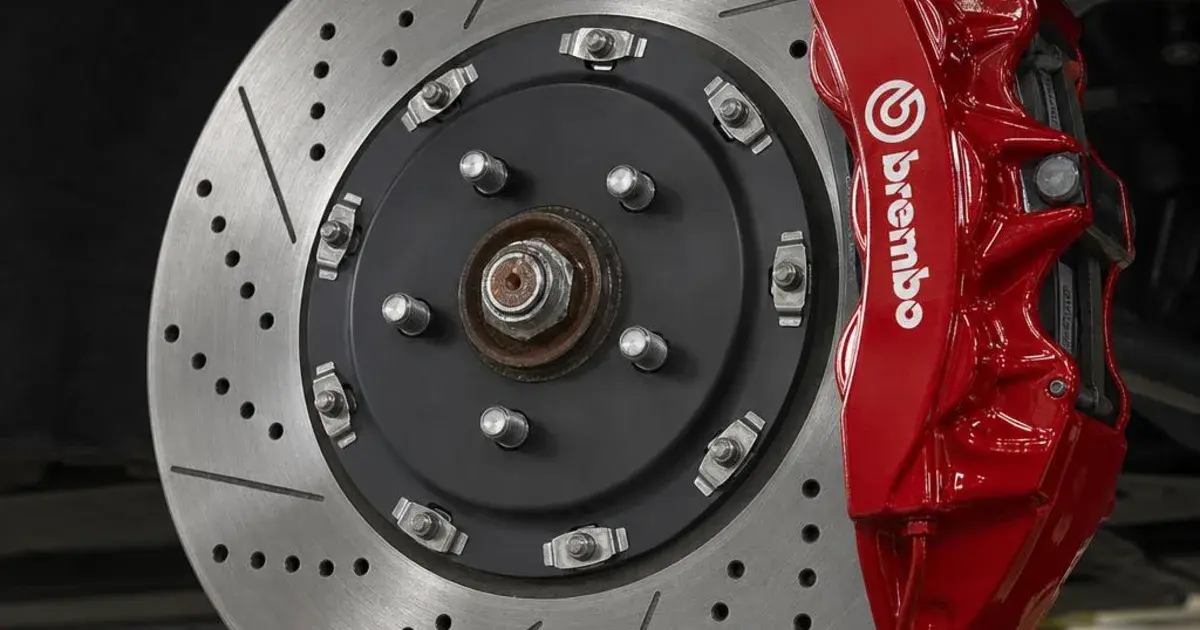
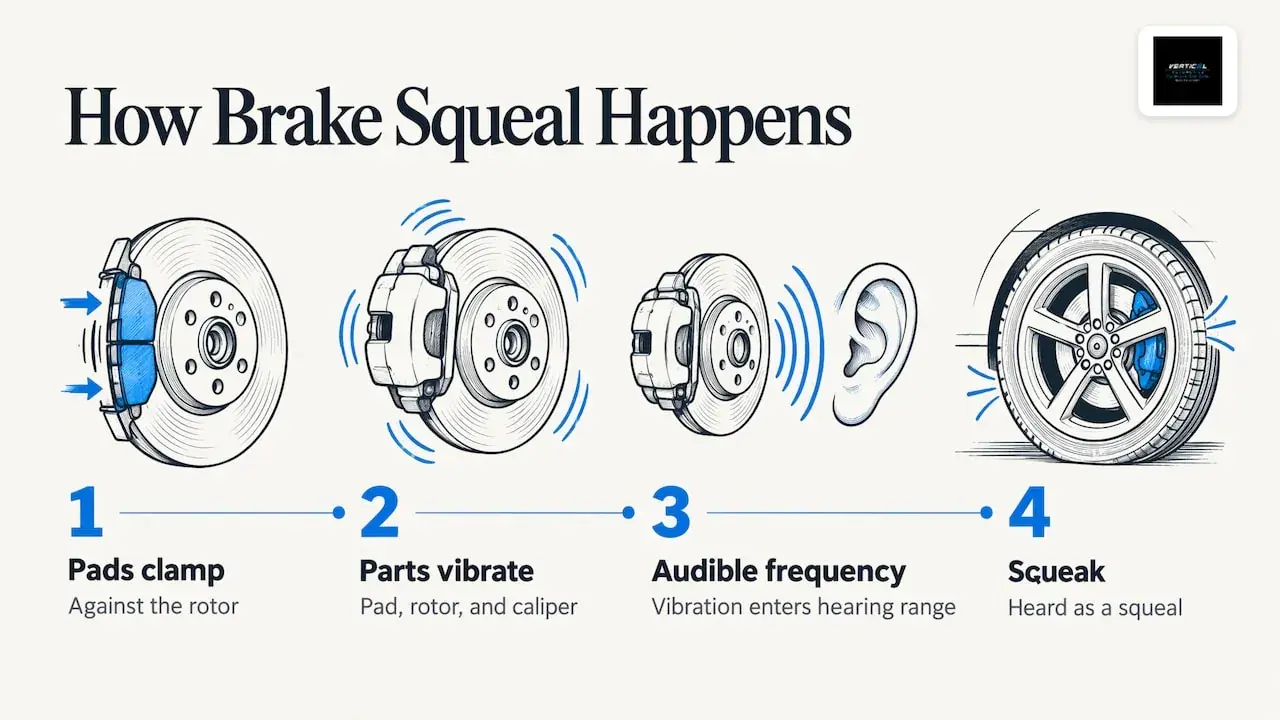
Your brakes stop the car with friction. The pads clamp onto the rotor (the metal disc behind each wheel), and that contact can make the pad, rotor and caliper (the clamp that holds the pads) vibrate. When that vibration lands at a frequency you can hear, you get a squeak or squeal.
A Porsche technical service bulletin filed with NHTSA describes squeal as a tiny “stick-slip” vibration as the rotor moves against the pad. High friction combined with low pedal pressure creates ideal conditions for it, which is why squeal is most common during light, gentle braking, like rolling to a stop at a red light. The same bulletin notes that normal squeal tends to fade when you press harder on the pedal.
Popular Mechanics compares it to a violin string stroked by a bow. Most squeals sit at one fixed pitch, set by the stiffness and weight of the pad and rotor, so speed and pedal pressure mostly change the volume, not the note. The same source points out that all brakes make some noise and a squeaky brake can stop a car just as well as a silent one.
That is the reassuring half. The other half is that several different problems produce the same sound, so the pattern matters.
Squeaks that are usually normal
Morning squeaks and rain
If you live in South Florida, humidity and sudden downpours are part of the story. Rotors are bare iron, and a thin layer of rust can form overnight or after a wet day. AAA lists this as a common cause of squeaky brakes: cold pads scrape the rust film off, and the noise is usually gone after a few stops.
What to expect: a squeak or light grinding sound for the first few brake applications, then silence. If it comes back every morning but disappears quickly, that is normal. If it stays all day, treat it as something else.
New pads that haven’t bedded in
New pads and rotors need time to wear into a matching contact pattern. Motor1 says light noise during this bedding-in period can be normal. The same article says an inspection is warranted if the noise lasts several days, gets louder or changes how the car brakes, because persistent squeaking after a brake job can also point to improper installation, too little lubrication on the right parts, or glazing.
Dust and small debris
AAA also lists dirt and debris trapped between the pads and rotors as a cause. A small bit of grit can squeak for a few stops and then work its way out. If you hear scraping instead of squeaking, and it doesn’t clear, something larger may be lodged in there.
Squeaks that are telling you something
The wear indicator: a squeal by design
Many pads have a small metal tab built in. As the friction material thins, the tab touches the rotor and makes a sharp squeal on purpose. Mazda explains that this squeak from thinning pads is an intentional design feature meant to tell you it is time to replace them. Motor1 describes the same small spring-steel “squealer.”
The signature is a new, consistent squeal that shows up at nearly every stop, not just the first one of the day. Popular Mechanics describes it as a ripping-sheet-metal scrape and calls it the one brake noise to act on right away, because it signals the friction material is nearly gone and the metal backing plates will soon damage the rotor.
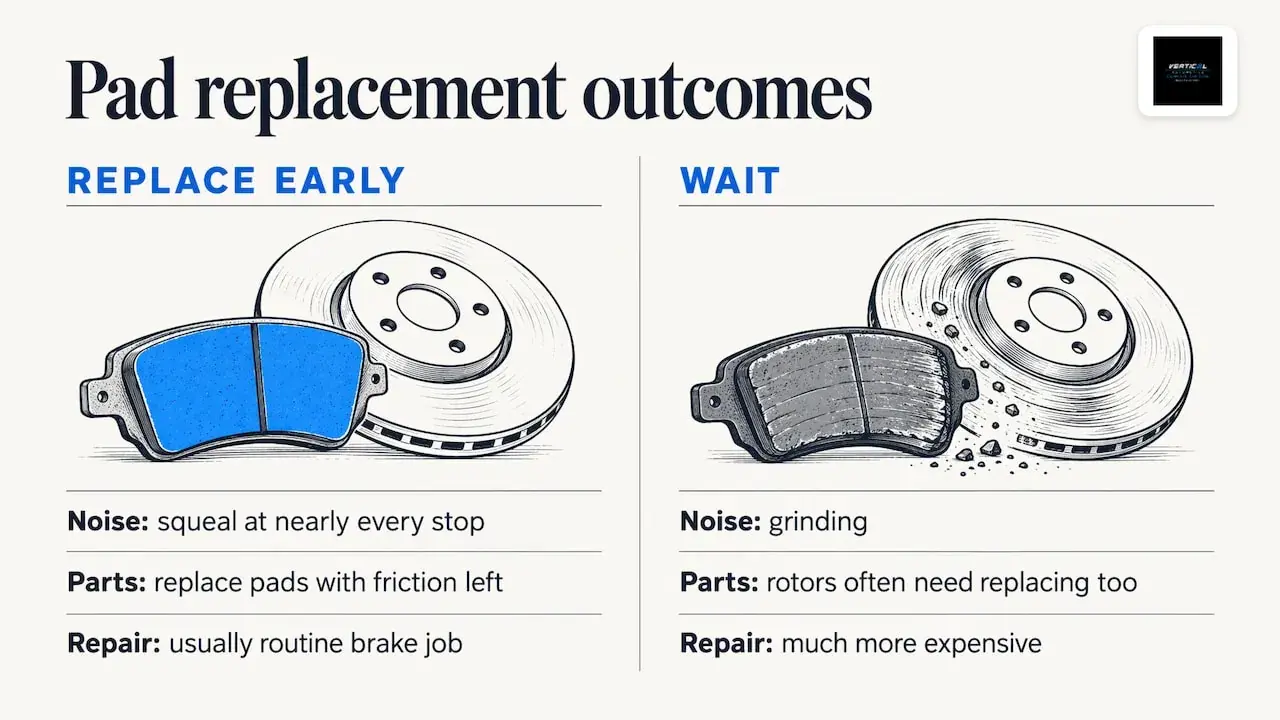
This is the squeak where timing pays off. Replace pads while there is still friction material on them and you are usually looking at a routine brake job. Wait until the noise turns to grinding and the rotors often need replacing too. Motor1 notes grinding can turn a routine brake job into a much more expensive repair.
Glazed pads and rotors
Heavy braking, long downhill stretches or resting your foot on the pedal can overheat pads until they develop a hard, smooth glaze. Mazda says glazed pads reduce friction and stopping power. Glazing typically shows up as a squeak under light braking, and the Porsche bulletin lists mirror-polished rotors and glazed pad surfaces among the signs of normal squeal conditions. Glazing that has gone far enough to reduce stopping power is not something to wait on.
Hardware, shims and installation
Pads sit in clips and often use shims, thin plates that damp vibration. When hardware is worn, loose, missing or poorly installed, the pad can rattle or sing against the caliper. AAA includes faulty installation or maintenance of calipers, pads or rotors on its list of common causes. This is why a squeak right after a brake job deserves a call back to the shop that did it, and why the pads are not always the guilty part. Sticking caliper pistons and rough rotor surfaces can produce the same noise.
Match the sound to the likely cause
| What you hear | When it happens | Most likely cause | What to do |
|---|---|---|---|
| Brief squeak or light grinding | First few stops after sitting overnight or rain | Thin film of surface rust | Nothing, if it clears within a few stops |
| Squeak for a few days | After new pads or rotors | Bedding-in | Watch it; get it checked if it lasts, worsens or changes braking |
| Sharp squeal at most stops | Constant, often during light braking | Wear indicator touching the rotor | Schedule pad replacement soon |
| Squeak only at low speed, light pedal | Rolling to a stop | Glazing, hardware or pad vibration | Have pads, rotors and hardware inspected |
| Scraping | Intermittent or constant | Debris stuck in the brake | Inspect soon |
| Grinding or growling | Every stop, often felt in the pedal | Pads worn through, metal on metal | Stop driving, arrange a tow or inspection |
Stop driving if you notice any of these
A squeak by itself is rarely an emergency. A squeak with any of the following is different. Motor1 advises paying particular attention to these symptoms, and CRC and other brake guides list the same ones:
- Grinding or growling. Metal is contacting metal.
- A soft, sinking or unusually hard pedal.
- Longer stopping distances.
- The car pulling to one side when you brake.
- Vibration in the steering wheel or brake pedal.
- A burning smell after braking.
- A brake warning light on the dashboard. Our dashboard warning lights guide explains what the different symbols mean.
- Brake fluid around a wheel.
If you notice any of these, don’t keep driving to see if it improves. Park the car and have it towed or inspected. Our guide to brake warning signs you shouldn’t ignore covers each one in more detail, and if the sound is already a deep metallic growl, read what grinding brakes mean.
What not to do: skip the spray
It is tempting to grab a can of WD-40 or a “quiet brake” aerosol. Don’t. Popular Mechanics warns against applying lubricant, adhesives, gels, liquids or sprays to the rotors or the pad friction material, and says spray-on quiet products change friction characteristics. Anything that reduces grip on a brake surface is a problem, because the whole job of that surface is grip.
The squeak is also a symptom. Silencing it with a spray hides the information about why it is there, whether that is a thin pad, a stuck caliper or a missing shim.
A quick self-check before you call
You can gather useful clues in five minutes without touching a tool:
- Note the pattern. Does it squeak when you first start out, at low speed, or only in light braking? Does it vanish when you press harder? Is it worse in rain or after the car sits?
- Listen for a change. A brand-new squeal at every stop points toward the wear indicator.
- Feel the pedal. Any softness, pulsing or longer travel moves this out of “harmless noise” territory.
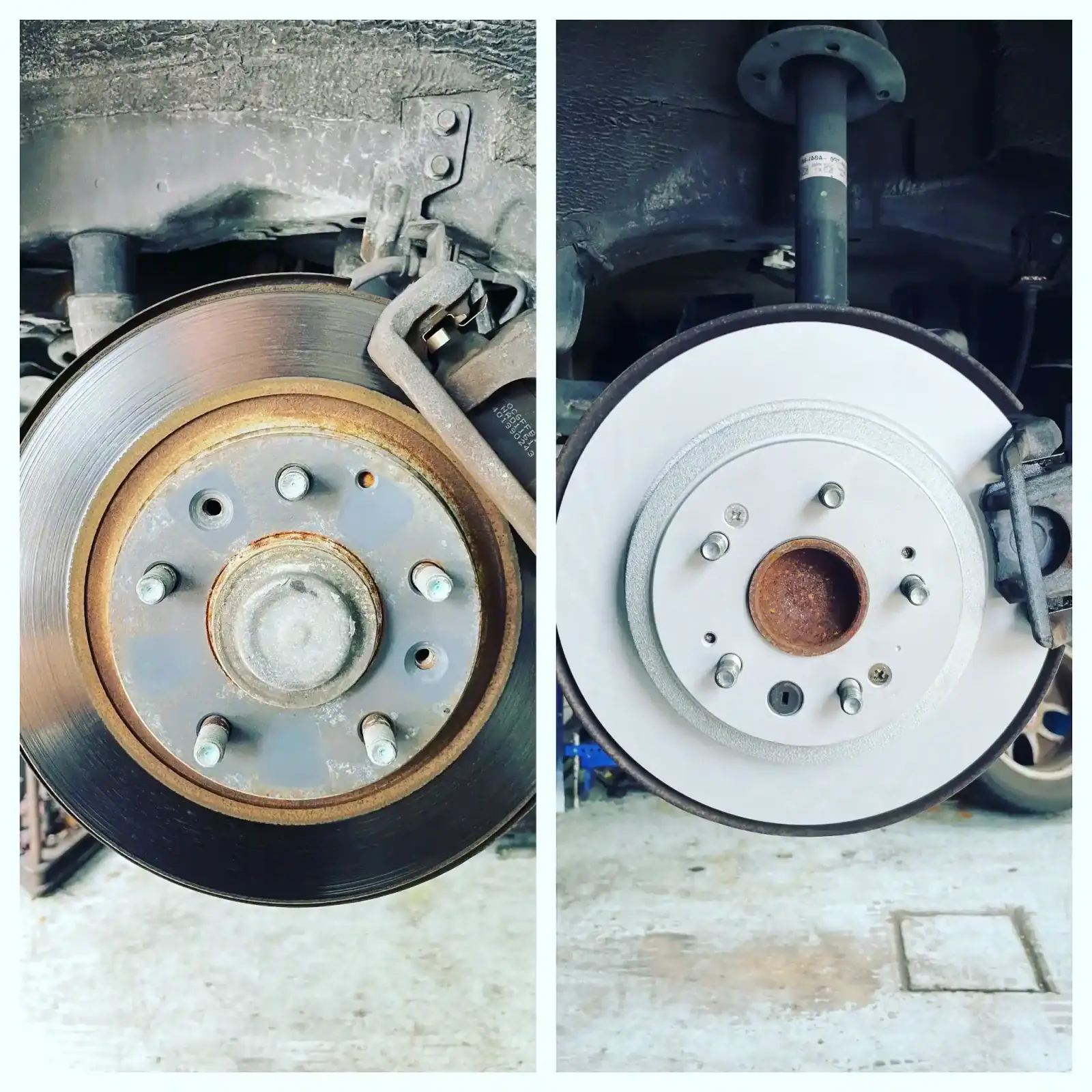
- Look through the wheel spokes with a flashlight. Very thin pad material, deep grooves in the rotor or a visible lip on its edge are signs of wear.
- Check the dashboard for a brake warning light.
These observations help, but they cannot see the inboard pad, the caliper slides or the hardware. Those sit behind the wheel, and the pad you can see is often not the one that has worn the most.
Why a professional inspection beats guessing
The hard part of a squeak is that the same sound comes from rust, glazing, a worn pad, a dry caliper slide or a missing shim. Replacing parts by guesswork can leave the noise in place and cost you money. Looking at all four wheels, measuring the pads, examining the rotors and checking that calipers move freely is what separates the harmless squeak from the one that needs a repair.
CarCapsule’s guide, which cites AAA, recommends a professional brake inspection at least once a year, and any time you notice a change in noise, pedal feel or stopping distance. In South Florida, where stop-and-go traffic on US-1, Oakland Park Boulevard and Commercial Boulevard is part of the daily drive, pads see a lot of light braking, which makes yearly checks sensible.
Squeaky brakes on EVs and hybrids
Electric and hybrid cars slow down partly through regenerative braking, so the friction brakes are used less. That doesn’t make them immune to noise. Brakes that rarely work hard can collect surface rust, and a light squeak or grinding at low speed is a common result of that. Our technicians work on hybrid and electric vehicles every day, so a brake noise on one gets looked at by someone who knows how those systems behave. See our Hybrid & EV service page for what we handle.
Get your squeaking brakes checked at Vertical Automotive
If your brakes squeak in a way that doesn’t fit the harmless patterns above, we’ll find out why. We service European, Asian, domestic, hybrid and electric vehicles, and we’ve serviced more than 54,000 vehicles. Our shops in Fort Lauderdale and Wilton Manors offer digital vehicle inspections, so the condition of your brakes is documented, and our Google rating is 4.9 stars.
Start with our brake and rotor service, or choose your shop: Fort Lauderdale or Wilton Manors. If the noise comes with other symptoms or you aren’t sure where it comes from, our Complete Diagnostic is the place to begin.

Brake repairs at Vertical Automotive are backed by our 36-month/36,000-mile warranty. And because brake fluid is part of the same system, our guide to brake fluid replacement explains the interval and what affects the cost.
FAQ
Is it okay to drive with squeaking brakes?
If the squeak is brief, happens in the first few stops, and the car stops normally, yes. If the squeal is constant, or comes with grinding, a soft pedal, pulling, vibration or a warning light, stop driving and have the brakes inspected. A squeal at every stop usually means the pads are close to the end of their life.
Why do my brakes squeak when stopping slowly?
Light pedal pressure is when squeal is most likely, because low pressure with high friction sets up the stick-slip vibration that makes the noise. Glazed pads or rotors, worn hardware and a worn pad can all contribute. If the noise disappears when you press harder, it is often a normal vibration, but it is still worth checking at your next service.
Why are my new brakes squeaking?
New pads and rotors need time to bed in, and a little noise during that period can be normal. If it continues for several days, gets louder or changes how the car brakes, the cause may be installation, missing shims, too little lubrication on the right contact points or glazing. Take it back to the shop that did the work.
Can I spray WD-40 on my brakes to stop the squeak?
No. Lubricants and sprays on the pads or rotors change how the brakes grip and can reduce stopping power. The fix is to find out why the brake is squeaking: a worn pad, a dry caliper slide, a missing shim or debris.
Do squeaky brakes mean I need new pads?
Not always. Rust after rain and new-pad bedding are harmless. But a new, consistent squeal at most stops is what the wear indicator is built to produce, and that does mean replacement is near. An inspection that measures the pad thickness at all four wheels answers the question.
Sources
- Porsche technical service bulletin on brake squeal, NHTSA, 2022
- The Most Common Reasons For Squeaky Brakes, AAA
- How to Fix Squeaky Brakes: A Simple Guide, Popular Mechanics
- Why Your Brakes Squeak And When You Should Actually Worry, Motor1
- Why Are My Brakes Squeaking?, Mazda USA
Recommended
About the Author

Vertical Automotive
Editorial team